
Sex Offender Checks in Candler County
The official starting point is the Georgia Bureau of Investigation Sex Offender Registry, known as SORT. Candler County's sheriff supplies and updates local registration information, while GBI publishes the statewide layer. The two roles complement each other. SORT is the search channel; the Candler County Sheriff's Office is the local registrar and the best place to ask about an apparent local error, a reporting location, or a suspected absconder.
A registry search is not a criminal-history report. It answers whether a person appears under Georgia's registration law and displays a limited public profile. Court files explain the conviction, and the sheriff maintains current local registration details. Search by enough facts to distinguish people with similar names. If safety is urgent, call 911 rather than approaching anyone listed.
Candler Registry Updates and Limits
GBI says the public registry updates daily, and sheriffs update submitted changes within two business days. Those schedules do not create an accuracy guarantee. Source agencies provide the data, and GBI expressly warns that information can be incomplete or wrong. A residence verification date is useful context, but it does not prove where a person is at the moment of a search.
The GBI registry information page explains the state system and its data sources. Its official interface also shows why search results should be checked against the local registrar.
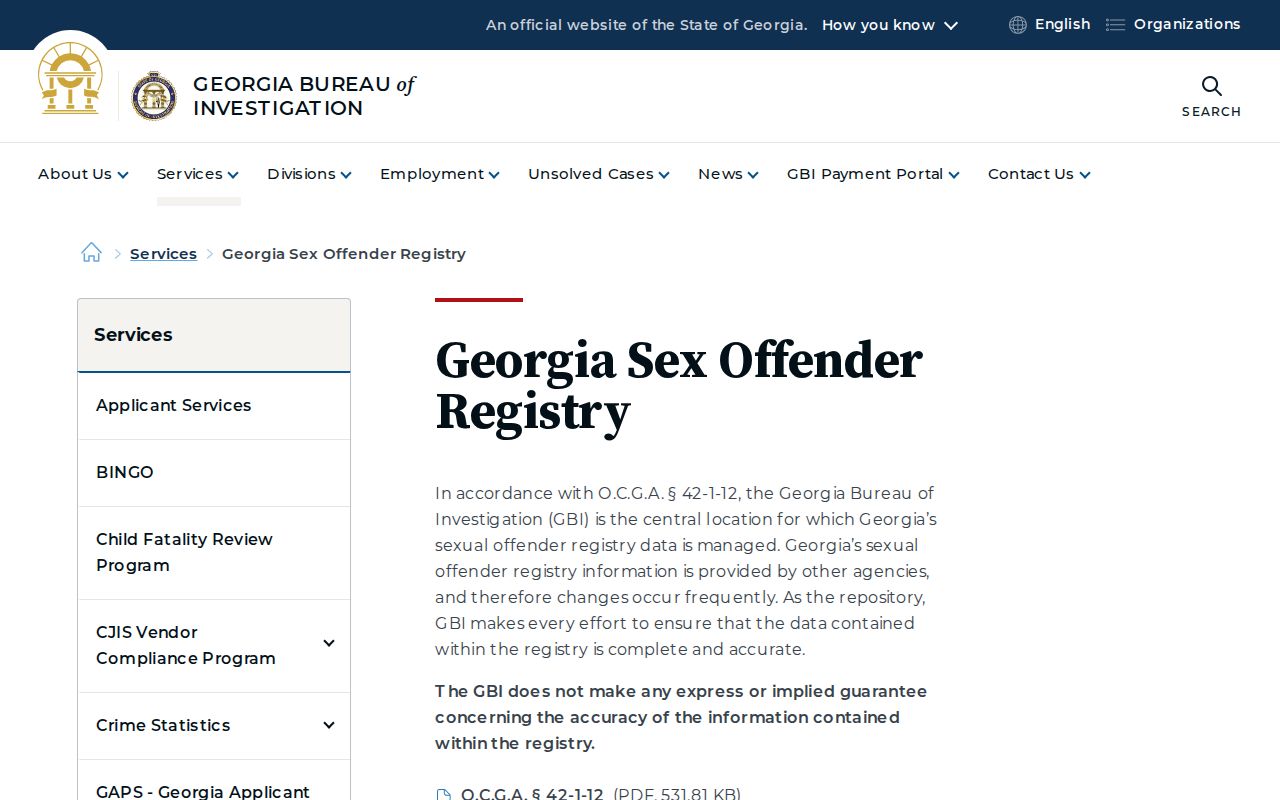
The state information page provides context that a single Candler County profile cannot supply, including the registry's limits and official download channel.
Note: A blank result can reflect wrong inputs, a new or unsubmitted change, no legal duty to register, or removal from the registry.
How to Search the Georgia Sex Offender Registry
SORT places conditions of use and a visual verification step before the search form. The CAPTCHA blocked a reproducible inspection of every later field, so exact dropdown choices and radius options should not be guessed. Use the live form and read its labels during the current session.
- Open SORT and read the conditions of use.
- Select “I Agree,” enter the visual verification code, and choose Continue.
- Use the live name or geographic controls, then narrow results to Candler County when that option appears.
- Compare the photograph, year of birth, physical description, address, county, aliases, and status before treating a result as the intended person.
| Control or field | Type | Required | Verified note |
|---|---|---|---|
| Conditions of Use / I Agree | Button | Yes | Acceptance is required before access. |
| Visual verification code | CAPTCHA and text | Yes | Blocks automated inspection. |
| Continue | Button | Yes | Advances to the live search. |
| Name and geography controls | Portal form | Session-dependent | Read current labels and options in the live session. |
The official SORT entry screen shows the consent and verification gate before any Candler County search.
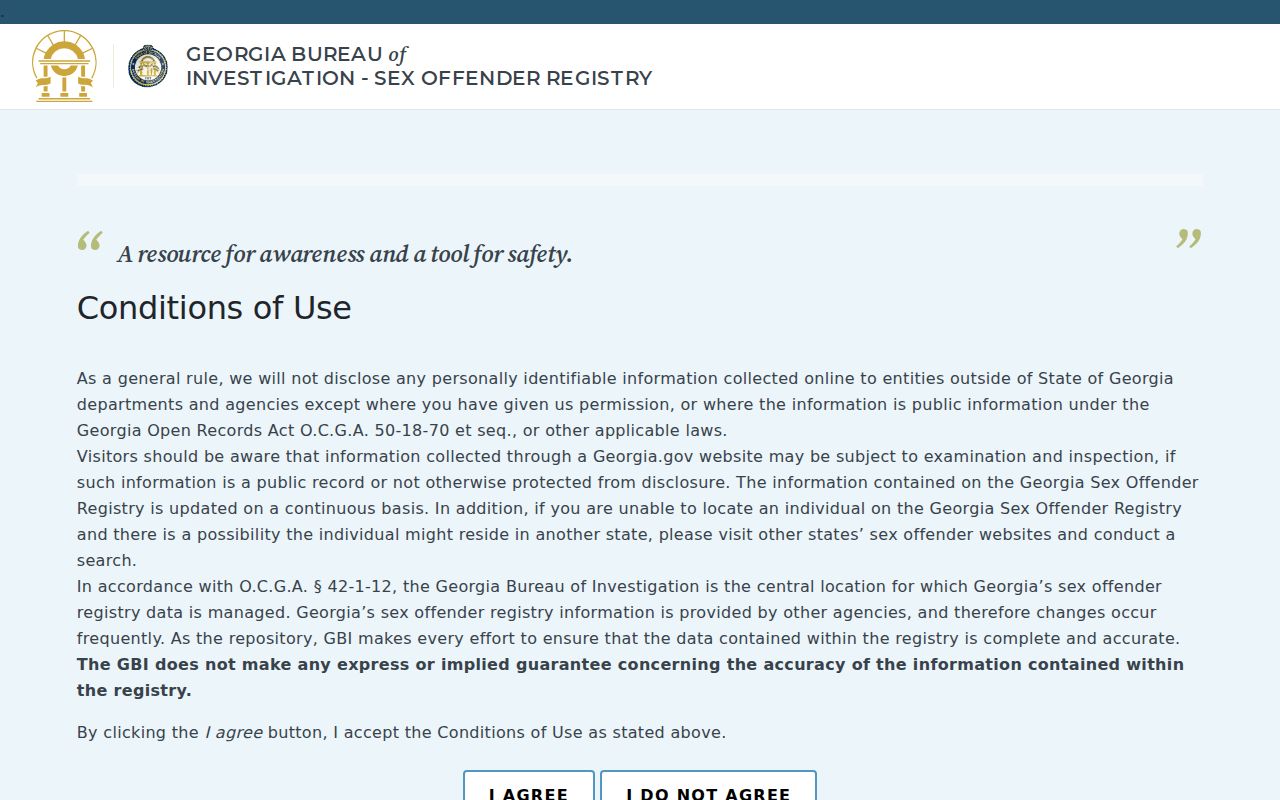
This captured official screen supports the verified controls above without claiming unseen search options.
Candler County Sheriff Registration
Candler County registrants report through the Candler County Sheriff's Office. The research did not locate separate public registration hours, an appointment page, or a fee schedule. Call the agency before traveling and ask for the registration officer, required documents, and current reporting location. Sheriff headquarters is at 1015 E Hiawatha Street, Metter, Georgia 30439, and the main and dispatch number is 912-685-2568.
Candler County Sheriff's Office
1015 E Hiawatha Street
Metter, GA 30439
912-685-2568
Ask for the sex offender registration officer and current reporting instructions.
Report a suspected absconder through the official GBI tip function or the sheriff. Provide facts, not confrontation. A public profile may show an absconder flag, but law enforcement determines the response.
Inside a Registry Profile
An inspected public Georgia profile, recorded without retaining anyone's identity, showed a defined set of public fields. It did not display vehicles, employer or school, scars or tattoos, victim age, statute number, sentencing court, or sentence. That distinction prevents a Candler County registry profile from being overstated as a full case file.
| Identity | First, middle and last name, suffix, aliases, gender, race, and year of birth rather than full birth date. |
|---|---|
| Appearance | Photograph with picture submission date, height, weight, hair color, and eye color. |
| Location | Primary or last known address and county. |
| Status | Predator and absconder flags, registration date, residence verification date, and leveling. |
| Offense | Counts, conviction date, conviction state, and offense description. |
| Reporting | Submit a Tip and error-reporting functions. |
The GBI registry FAQ places those public fields within Georgia's reporting rules.
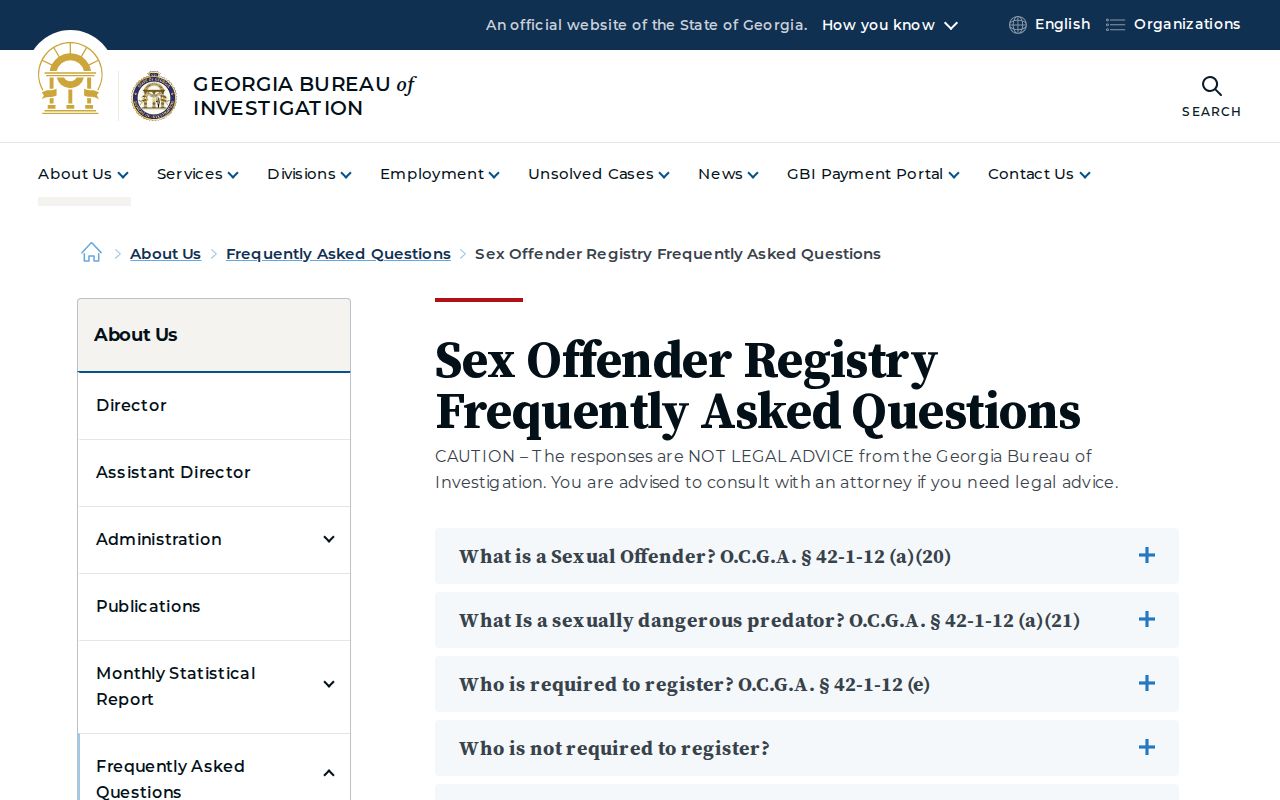
The official FAQ is the better source for legal duties than assumptions drawn from one profile.
When Candler Search Finds Nothing
No result does not prove that no record exists. Try a spelling variation or alias and recheck the county and geography. A new change may still be moving from the sheriff to GBI. Some people have no statutory registration duty, and a completed First Offender matter may be excluded. Death or lawful removal can also end a listing.
For a cross-state check, use the U.S. Department of Justice National Sex Offender Public Website. NSOPW supplements SORT when a person may have moved across a state line, but it does not replace the Candler County sheriff's local role. Confirm a material discrepancy with the agency that supplied the record.
Georgia Registration Levels and Requirements
Georgia uses Level I, Level II, Sexually Dangerous Predator, and Not Leveled in public data. These are risk classifications, not the federal SORNA Tier I, II, and III duration labels. Ordinary Georgia registration is generally for life, subject to limited court relief under state law. A Level I label must not be translated into a “10-year tier.”
| Georgia label | Meaning | Registration and public note |
|---|---|---|
| Level I | Board-assessed lower risk | Georgia registration and removal law controls; not federal Tier I shorthand. |
| Level II | Board-assessed intermediate risk | Georgia law controls duration and petition rights. |
| Sexually Dangerous Predator | Board finding of future-danger risk | Lifetime GPS and added reporting provisions apply. |
| Not Leveled | No public level shown | Observed in public data; it is not proof of no registration duty. |
Registrants generally report in person around their birthday and must report specified changes promptly. Exact duties depend on the statute, conviction date, and status. The official FAQ should control.
Candler Residency Rules Need Dates
Georgia's 1,000-foot residence and work restrictions are not one simple rule for every registrant. O.C.G.A. § 42-1-15 governs applicable post-July 1, 2008 restrictions, exemptions, and the method based on outer property boundaries. Earlier conviction dates can implicate other versions of the law.
For a Candler County address question, identify the conviction date and the type of nearby property before drawing a conclusion. A map pin alone cannot resolve exemptions or boundary measurements. Legal advice should come from a qualified attorney, while the sheriff can explain the registration procedure it administers.
Leaving Georgia's Registry
O.C.G.A. § 42-1-19 allows some eligible people to petition Superior Court for release after completing prison, parole, supervised release, and probation and meeting statutory criteria. For many eligible applicants, the law uses a ten-year point after sentence completion. That is a petition rule, not a ten-year registration tier.
A Candler County petition belongs in the proper Superior Court proceeding and turns on the record, dates, offense, assessments, and statutory exclusions. The broader Candler County criminal court case file may supply the judgment and sentence dates needed to assess the timeline.
The GCIC criminal-history FAQ helps separate registry data from a Georgia criminal-history record.
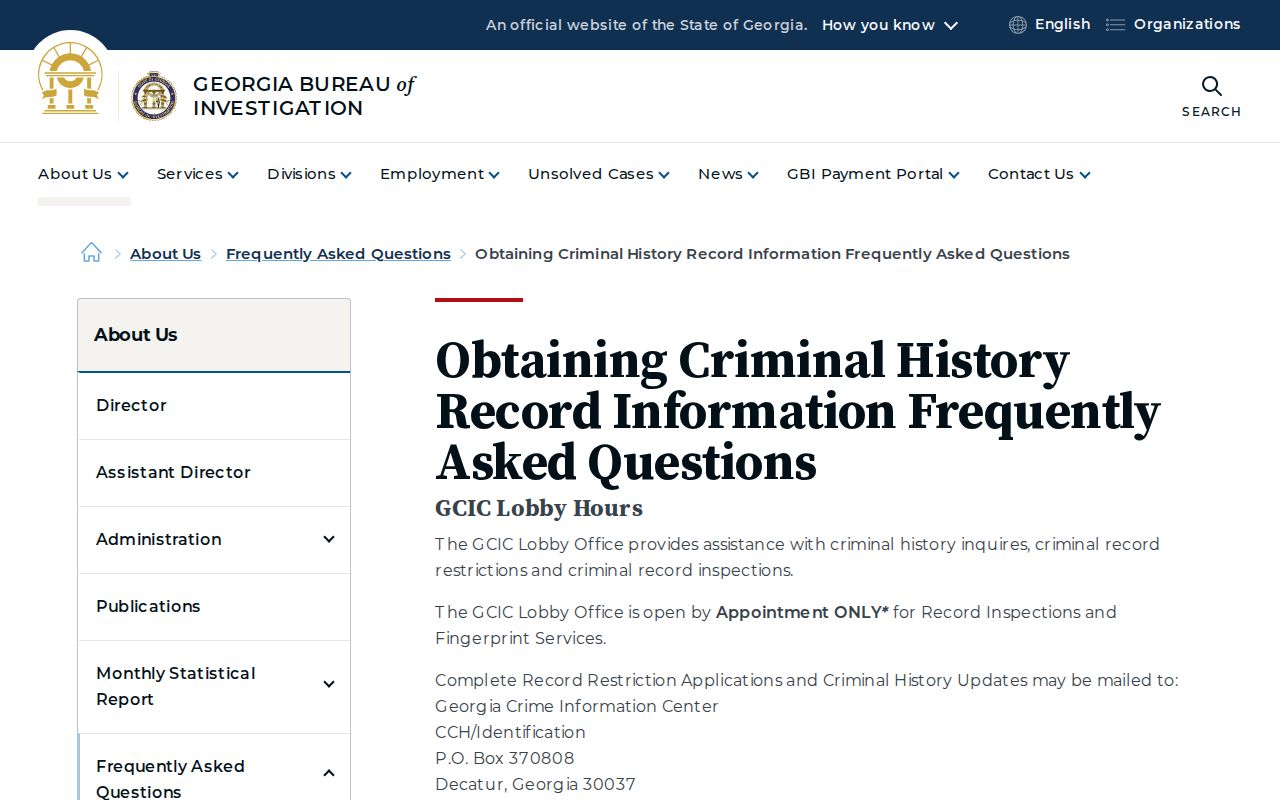
The official explanation reinforces that registry status, a rap sheet, and a court judgment answer different questions.
Registry Is Not Custody Data
A registry profile does not show whether a person is in federal custody. The Federal Bureau of Prisons Locator covers federal prisoners from 1982 to the present and supports searches by BOP Register, DCDC, FBI, or INS number, or by name with descriptive fields. It is not a Candler County registry tool, jail roster, or Georgia Department of Corrections search.
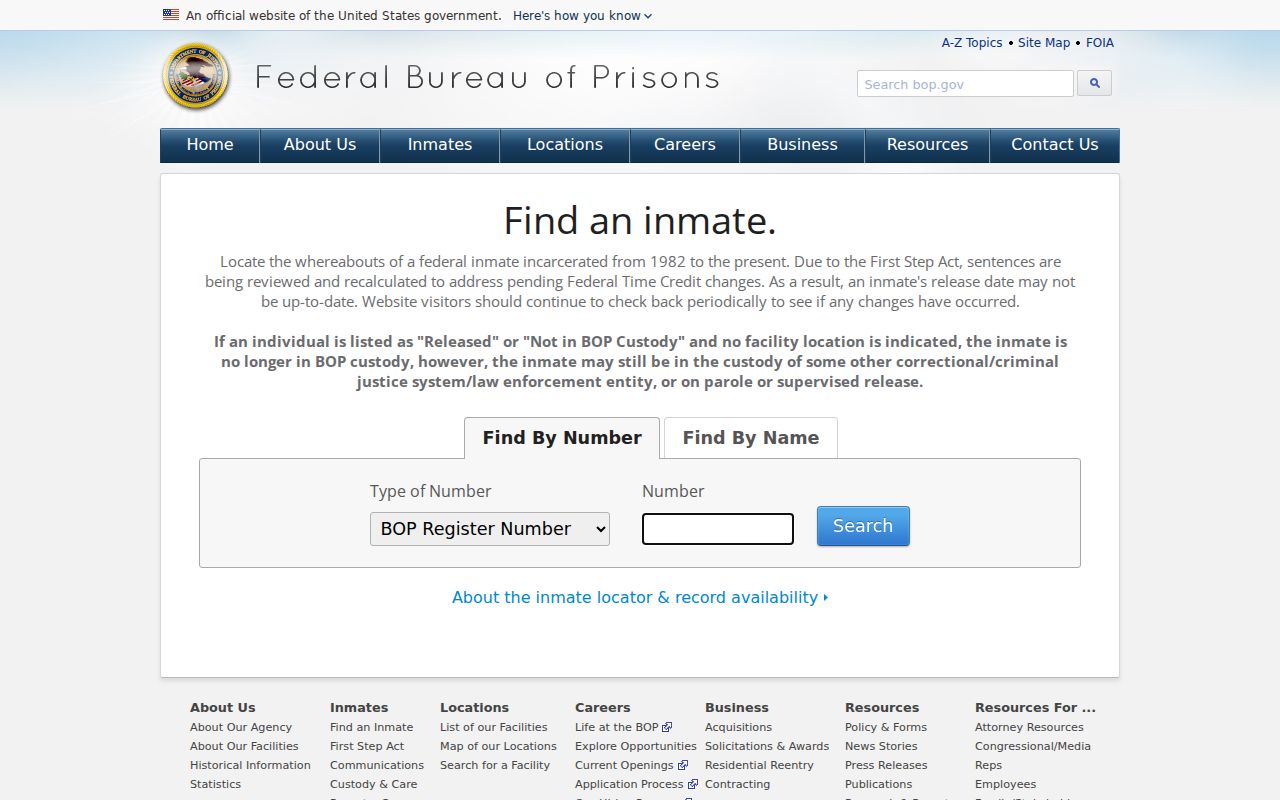
The federal locator illustrates why custody status must be checked in the system that holds the person rather than inferred from a Candler County registry address.
Community Notification and Lawful Use
The registry exists for safety and community awareness. Review official details, plan lawful precautions, and send corrections or tips to the proper agency. Never use a listing as an invitation to visit an address or confront a registrant, household member, neighbor, or property owner.
Statutory misuse warning: Registry information must not be used to unlawfully injure, harass, or commit a crime against a registrant or anyone at a listed address. Unlawful use may bring civil or criminal penalties under Georgia law and 34 U.S.C. § 20920(f).
Profiles can be incomplete or outdated even though SORT updates daily. Confirm a result with the Candler County Sheriff's Office or the originating agency before relying on it. Personal and family safety decisions should rest on verified facts and lawful conduct.
Community awareness works best when the search has a defined purpose. A resident can check an address area, review an official photograph and status, or compare Georgia and national results after a move. Save the date of the check because the registry changes. If a profile appears internally inconsistent, use its error-reporting function and give GBI enough detail to locate the field in question. If the concern is a local reporting violation, contact the sheriff instead of trying to investigate it in person.
Do not infer unlisted facts. The public profile inventory did not show a registrant's employer, school, vehicle, full birth date, victim information, sentencing court, or sentence. Those omissions are deliberate limits of the public product, not blanks that a searcher should fill with rumors or data from commercial people-search sites. Court records may add conviction context, but sealed material and protected victim facts remain outside lawful public access.